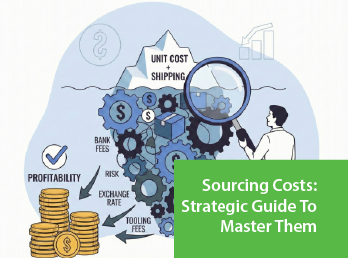
MASTERING SOURCING COSTS: A STRATEGIC GUIDE TO REAL PROFITABILITY
I keep fond memories of my first sourcing assignment. It was both difficult and stressful, especially when it came to sourcing costs. During that first project, I understood that the initial quote from a supplier is a bit like the first five minutes of a movie. It gives you the premise, but it certainly doesn’t tell you the whole story.
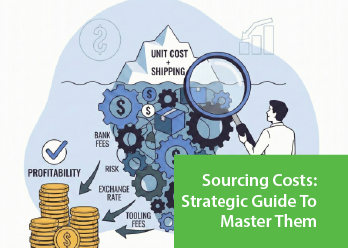
For some time, I was amazed at some buyers who’d like to brag about a low unit price they’d just negotiated. They made it sound like a victory. But I know better now. As I became a seasoned procurement professional, I learned that unit price and COSG (Cost of Sold Goods) are two very different animals.
If you want to increase your value as a buyer and protect your company’s bottom line, you need to look beyond the unit price on the invoice. This is why I decided to write about all the sourcing costs that a purchaser has to deal with on a daily basis. I organized this post into 3 sections, from the most obvious sourcing costs to the least obvious. I hope that my take at categorizing costs into: cash, time, and labor; will make sense to those in search of information about purchasing related costs.
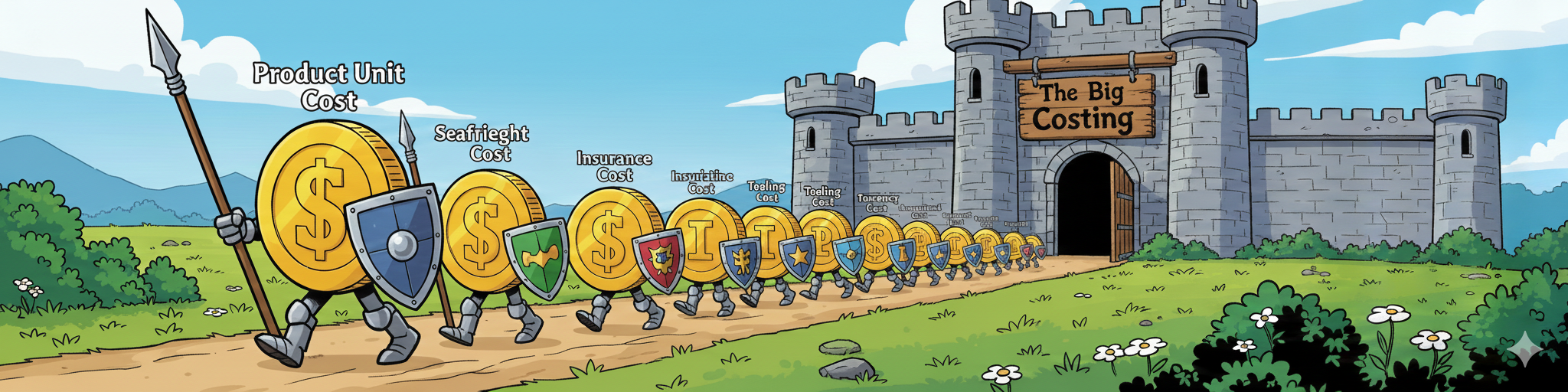
We will start with the numbers found in your initial quote and then move into the practical logistics and the strategic acquisition costs that separate the amateurs from the experts.
THE INITIAL QUOTE: THE BASICS OF SOURCING COSTS
Early on sourcing projects, the topic of cost is usually addressed within the first few emails with the supplier. Not that it is the only parameter that matters when a business outsources manufacturing, but it’s a decisive one. As such, when an initial quote reaches the desk of a purchaser, the automatic reflex is to check it against the target costing. Yet, even young purchasers quickly learn that an initial quote is far from answer all cost related questions.
INITIAL QUOTE DEFINITION
Every time a potential buyer asks a supplier for a quote about a product, or basket of products with a supplier, they get an Initial Quote. That is, even when the vendor lists items and prices on a piece of paper in a hotel lobby, we call it an Initial Quote.
Why this product quotation is considered “Initial”?
Simply because it is not a binding document. It is an estimate of the goods (or services) and serves as a base for negotiation.
What information is usually included in an initial product quote?
The information displayed in an initial quote can vary a lot. But a standard quote usually includes the following data:
- Supplier & Buyer Information (name, address, contact details)
- Quote Reference info (an invoice number, date of publication, and time of validity
- Product info ( product name, reference number, specifications, quantities)
- Cost info (pricing unit, currency, IncoTerm, unit price, total price)
- Terms & Conditions (payment terms, methods, conditions of order, order timeline)
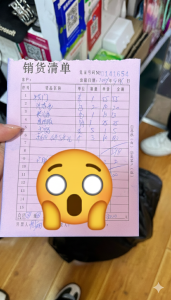
But as I already said, it really depends on the type of supplier you are addressing. if you go the Yiwu wholesale market, the quote you will get will most likely look like that:
Now that we have been over what an initial quote is made of, the logical follow-up question is “how to compare them”. I am sure that, like myself, you never solely rely on a single quote to place your order. Or do you?
Since vendors don’t use the same template for their invoice, how can we expect them to be quote their prices in a standardized way? The only method to ensure that your sourcing team makes the right buying choice is to check for detailed costs with each supplier. That is, to normalize the quotation process.
COMPARING QUOTES: NORMALIZING IN RFQ
Sourcing Specialists normalize quotes to compare them efficiently and without errors. Normalization can cover almost all contents in the quotation. For those with a busier schedule, requesting suppliers to use a single Incoterm is a start, but not nearly enough. The aim is to reach a certain level of clarity so you are confident enough to share the aggregated costs information. There are pitfalls to avoid, such as comparing an EXW price with an FOB price for example.
EXW vs FOB
EXW and FOB are acronyms that belong to InCoTerms (short for International Commercial Terms). There are standardized rules that define the responsibilities of each party (Buyer and Seller) when they contract on a commercial level. InCoTerms are used for both local sourcing and global sourcing.
EX Works (also known as EXW)
ExW is the acronym of Ex-Works. Under this rule, the buyer bears all costs and risks from the moment the goods leave the factory. In this scenario, overseas buyers are responsible for every export and import related cost from the country of the seller, to the place of delivery.
Free On Board (also known as FOB)
FOB is the acronym of Free On Board. Under this rule, the seller bears responsibility and costs up to the departure of the container ship from the port of departure. That is, a FOB cost include all costs associated with the export clearance and loading on the ship. For international buyers, it means that they are still expected to take responsibility and be charged with sea freight, insurance, duties and tax at arrival.
There are other parameters that you can normalize, such as :
- Product specifications: they are inherently tied to costs, so better make sure that the products in each quote features the exact same specifications, or that you know of their differences. Product specifications usually include :
- Physical characteristics;
- Performance;
- Materials;
- Sustainability;
- Packaging: packaging can weight a lot on the unit cost. When buying first aid plasters from China for example. The plaster itself does not cost much, but when you add a layer of retail grade printed box with a hanger, plus shipper boxes for inventory, the unit price jumps.
- Certification: or compliance if you prefer. A standard floor lamp has a lower manufacturing cost than a UL compliant hotel floor lamp
Normalized cost data becomes reliable cost data. You and your team can now rely on the dataset gathered during RFQ. Once supplier vetting and sample validation processes complete, a critical step the ordering process is the Pro forma Invoice.
TO BE CONTINUED …